
Table of Contents
ToggleUnmatched Power-to-Weight Ratio for handheld hydraulic tools
Hydraulic handheld tools are highly efficient and flexible, widely used in road maintenance operations, primarily for cutting, crushing, and drilling. Their key features include the following:
1. High-Efficiency Power
Utilizing a hydraulic power pack (typically powered by a hydraulic power station or portable hydraulic power unit), they deliver high power output, making them suitable for high-intensity work.
Compared to electric or pneumatic tools, hydraulic tools offer greater stability during continuous operation, as well as greater torque and impact force.
2. Lightweight and Flexible
Ergonomically designed and lightweight, they are easy to operate and suitable for working in confined spaces or at height.
Some tools feature a shock-absorbing design to reduce fatigue after prolonged use.
3. Versatility
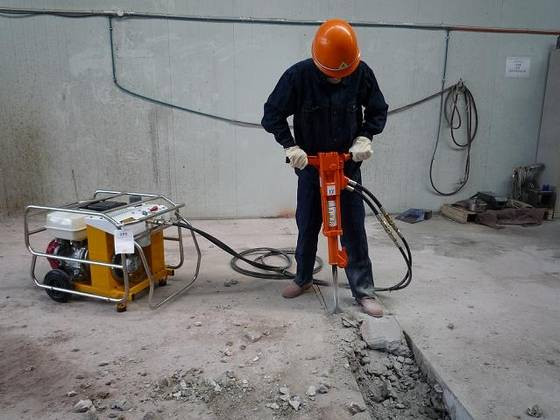
They can be equipped with a variety of attachments (such as handheld hydraulic breaker, hydraulic diamond chainsaw, and drills) to suit different maintenance tasks:
Handheld Hydraulic Breaker: For breaking up damaged pavement or concrete.
Hydraulic diamond chainsaw: For cutting cracks in pavement or patching asphalt.
Hydraulic core drill: For drilling holes to install guardrails or signs.
4. Durability
Key components are made of high-strength alloys or special coatings, offering wear and corrosion resistance and adaptability to harsh outdoor environments.
The hydraulic system is well sealed and dust- and water-resistant.
5. Low Maintenance
The hydraulic system features a simple structure and a low failure rate. Daily inspection of the hydraulic oil and filter is sufficient.
No frequent carbon brush or battery replacement is required, as is the case with power tools.
6. Safety and Environmental Protection
No sparking is generated, making it suitable for flammable and explosive environments (such as construction near gas stations).
Relatively low noise and vibration minimize disturbances to the operator and the surrounding environment.
7. Adaptability
The operating speed can be controlled by adjusting the hydraulic flow rate, allowing precise operation on materials of varying hardness (such as asphalt and concrete).
Some models are compatible with small construction machinery (such as skid-steer loaders).
Typical Applications for handheld hydraulic tools
Road crack repair and pothole treatment
Curb removal or installation
Traffic infrastructure (guardrails, signs) maintenance
Bridge expansion joint repair
Precautions
Regular inspection of handheld hydraulic tools is required to prevent bursts. Wear protective gear (gloves, goggles, etc.) when operating.
If you require more specific tool model or brand recommendations, please provide further details on the usage scenario and requirements.