
Table of Contents
ToggleWhat is a hydraulic submersible trash pump
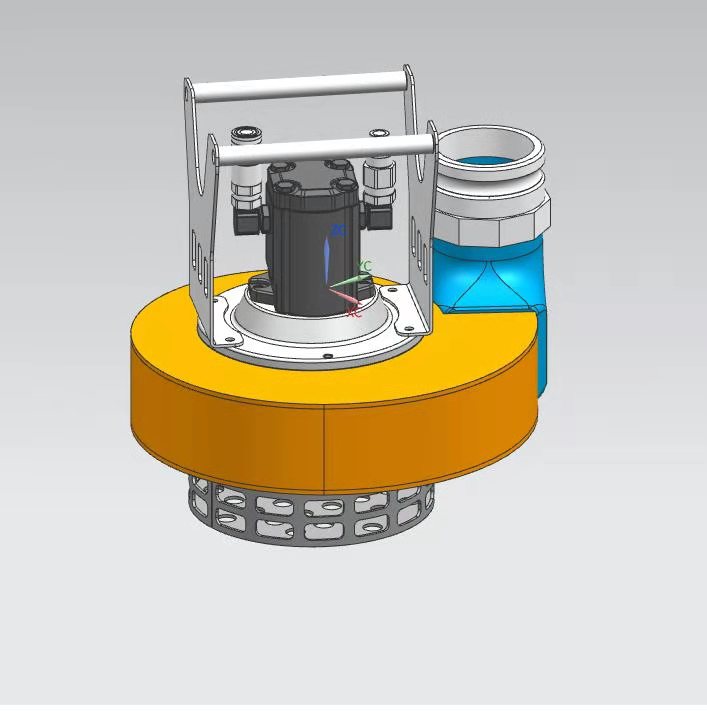
A hydraulic submersible trash pump is a centrifugal pump driven by a hydraulic motor, designed to operate fully submerged while pumping water containing solids, debris, fibers, and sludge. It converts hydraulic energy into mechanical rotational energy to generate centrifugal force for suction and discharge.
How does NEWALUX hydraulic submersible trash pump works
NewaLux Hydraulics manufactures hydraulic submersible trash pump that are suitable for a variety of applications including liquid transfer, flushing, dewatering, etc. These pumps can be either hydraulically driven or driven by an engine, depending on the application and model.
The fluid is drawn into the pump’s suction port, enters the impeller, and is accelerated by the rotating vanes. This acceleration increases the fluid’s kinetic energy, which is then converted into pressure as the fluid is forced out of the pump’s discharge port. The casing channels the fluid from the impeller to the discharge port, preventing the fluid from flowing backward.
Hydraulic submersible trash pump used to move liquids from one point to another by utilizing centrifugal force. They consist of a casing, impeller, shaft, and motor. The impeller, a rotating disc with vanes, is the heart of the pump. As the impeller spins, it creates a centrifugal force, pushing the liquid outward towards the casing.
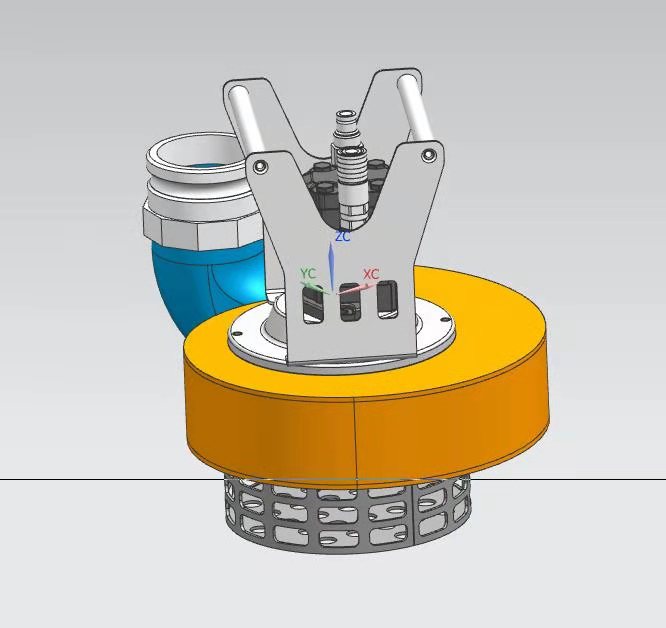
Core Working Principle (Step-by-Step)
Hydraulic Power Input
- High-pressure hydraulic fluid (oil) is supplied from an external power source—such as an excavator, skid-steer, tractor, or dedicated hydraulic power unit (HPU)—via high-pressure hoses.
- The fluid flows into a hydraulic motor integrated into the pump housing.
Energy Conversion (Hydraulic → Mechanical)
- Pressurized fluid acts on the motor’s internal vanes, gears, or pistons, causing the motor shaft to rotate at high speed.
- This rotational motion is directly transmitted to the pump’s impeller through a sealed shaft.
Centrifugal Suction & Fluid Handling
- The impeller (typically a large-open, non-clog, 2–3 blade design) spins rapidly inside the pump casing.
- Centrifugal force flings fluid and solids outward toward the impeller periphery, creating a low-pressure zone (vacuum) at the impeller’s center (eye).
- Atmospheric pressure and hydrostatic head push surrounding water, sludge, and debris into the pump’s suction inlet.
- Many models include a bottom agitator/stirrer that breaks up settled solids and prevents clogging at the intake.
Pressurization & Discharge
- Fluid and solids are accelerated radially outward by the impeller and collected in the volute casing.
- The volute converts kinetic energy into pressure energy, pushing the mixture through the discharge outlet and into a hose or pipeline.
- The process repeats continuously as long as hydraulic power is supplied.
Hydraulic Fluid Return
- Spent hydraulic fluid exits the motor and returns to the power unit’s reservoir via a return line, completing the hydraulic circuit.
Key Design Features for Trash Handling
- Non-clog impeller: Wide passages to pass solids (typically up to 3 inches/75 mm) without jamming.
- Submersible, sealed construction: Watertight housing of a hydraulic submersible trash pump allows full submersion; no risk of electric shock (no underwater electric motor).
- Agitator/cutter option: Breaks up fibrous material and heavy sludge.
- Hydraulic speed control: Flow rate can be adjusted by varying hydraulic fluid flow/pressure.