
Hydraulic wood chainsaw
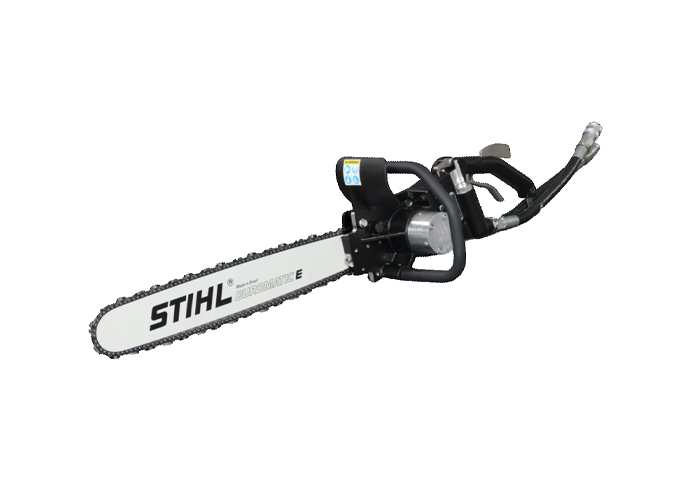
Hydraulic wood chainsaw
Product Details:
- Product Type: Hydraulic wood chainsaw
- Model: CS06
What is a Hydraulic wood chainsaw
NewaLux Handheld Hydraulic wood chainsaw, with their efficient cutting, automatic lubrication,
flexible adjustment, and portability, have broad application prospects in firefighting, forestry felling, timber harvesting, and outdoor woodworking.
Features
High power-to-weight ratio: Provides powerful cutting power while maintaining a low weight.
Automatic chain lubrication system:continuously provides the optimal amount of lubricant lubricated even at high speeds, reducing wear and heat buildup.
User-friendly design: The lightweight aluminum handle is ergonomically designed, ensuring a comfortable posture for extended use.
Safety and reliability: The Hydraulic wood chainsaw is equipped with safety features such as a guard and a safety switch to ensure operator safety.
| Type | CS06 | CS07 |
|---|---|---|
| Weight(kg) | 3 | 7 |
| Bar size(mm) | 460(18inch) | 630(25inch) |
| Cutting size(mm) | 460 | 630 |
| Cutting depth(mm) | 460 | 630 |
| Output flow(lpm) | 26-34 | 26-34 |
| Operating pressure (bar) | 105-140 | 105-140 |
| Length(mm) | 360 | 430 |
| Width(mm) | 220 | 230 |
| Height(mm) | 220 | 265 |
Applications for hydraulic wood chainsaw
1. Utility Line Maintenance and "Bucket" Work
This is perhaps the most common home for the hydraulic wood chainsaw. Most utility “cherry picker” trucks are equipped with auxiliary hydraulic outlets right at the worker’s basket.
Why it’s used: Linemen don’t have to worry about pull-starting a gas engine 50 feet in the air. They simply plug the saw into the truck’s hydraulic system and get instant, high-torque cutting power.
Safety: There are no exhaust fumes blowing in the operator’s face, and the lack of a centrifugal clutch means the chain stops the moment the trigger is released.
2. Underwater Construction and Salvage
A gas-powered chainsaw cannot breathe underwater, and electric saws pose a lethal electrocution risk to divers. The hydraulic wood chainsaw is a closed system, making it the only viable choice for subaquatic timber work.
Marine Piling: Divers use these saws to cut through thick wooden bridge pilings or pier supports.
Dam Maintenance: Clearing submerged trees or debris that has become lodged in hydroelectric intake screens.
Shipwreck Salvage: Cutting through wooden hulls or structural timbers during maritime recovery.
3. Indoor and Confined Space Demolition
When a renovation project requires cutting through heavy timber shoring or wooden structural beams inside a building, exhaust fumes are a major health hazard.
Zero Emissions: Since the power source (the engine/pump) stays outside, the operator can work in basements, tunnels, or windowless rooms without the risk of carbon monoxide poisoning.
Reduced Noise: While the chain itself makes noise, the “roar” of the engine is located elsewhere, making communication between crew members much easier.
4. Heavy-Duty Disaster Relief and Clearing
After a hurricane or flood, roads are often blocked by a “tangle” of trees, mud, and debris.
Torque vs. Speed: While gas saws are fast, hydraulic saws provide massive torque. They are less likely to “bog down” when cutting through water-logged, muddy, or silt-covered timber that would dull and stall a standard saw.
Durability: The hydraulic motor is sealed, meaning sand and grit from the floodwater won’t get sucked into an air intake and ruin the engine.
5. Integration with Forestry Machinery
Many specialized forestry attachments utilize hydraulic chainsaws as part of a larger system.
Feller Bunchers: Large machines that “grasp” a tree and use a high-speed hydraulic wood chainsaw at the base to fell it in seconds.
Firewood Processors: Automated machines that use hydraulic saws to buck logs into specific lengths before splitting them.
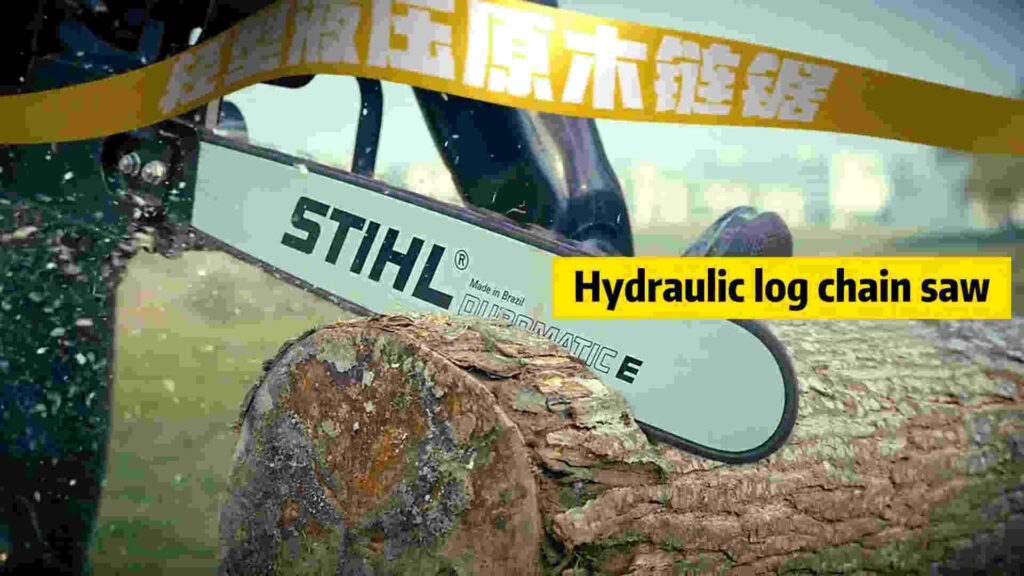
Comparison: Hydraulic vs. Gas-Powered
| Feature | Gas Chainsaw | Hydraulic wood Chainsaw |
| Power Source | Onboard Engine | External Pump/Pack |
| Weight in Hand | Heavy (Engine + Fuel) | Light (Motor only) |
| Underwater Use | No | Yes |
| Exhaust Fumes | Yes | None at the tool |
| Maintenance | High (Spark plugs, filters) | Low (Self-lubricating) |