
Hydraulic diamond concrete chainsaw
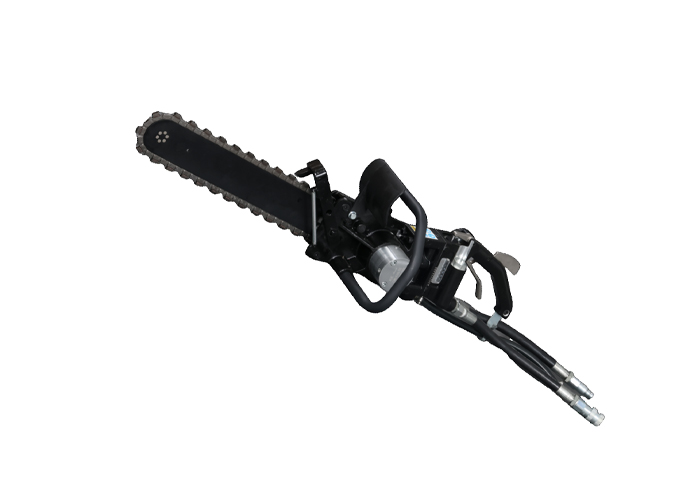
Hydraulic diamond concrete chainsaw
Product Details:
- Product Type: Hydraulic diamond concrete chainsaw
- Model: DS11
What is a Hydraulic diamond concrete chainsaw
“Hydraulic diamond concrete chainsaw” driven by the power unit, coupled with a bar containing water channel for chain lubrication, It makes cutting concrete and reinforced concrete and rock as well as metal materials.
◎Features
◆Light weight and powerful function of Hydraulic diamond chain saw
◆The handle and the guard matched with the body dynamics
◆With laser welded segments impregnated with diamond and water channel for chain lubrication and cooling
◆Option different bars and chains for cutting depth 330mm~500mm, plunge cutting for window and door openings, air conditioner cutouts, and notching or trimming and cutting square corners without over-cut.
◆Replace with the PowerGrit utility Saw for cutting ductile iron pipe, steel pipe and PVC pipe
| Type | DS11 |
| Weight(kg) | 11 |
| Bar size(mm) | 460(18inch) |
| Cutting depth (mm) | 460 |
| Output flow(lpm) | 26-34 |
| Operating pressure (bar) | 105-140 |
| Length(mm) | 970 |
| Width(mm) | 240 |
| Height(mm) | 265 |
Key Components and How It Works
1.Hydraulic Power: The saw is powered by a hydraulic system, typically from a separate power pack (a unit with a diesel or electric motor driving a hydraulic pump).
- Advantages:
- Immense Power: Hydraulics provide high torque at low speeds, perfect for the extreme resistance of cutting reinforced concrete.
- Safety: No risk of electric shock and minimal sparking, making it safer in environments with potential gas leaks or around rebar.
- Cool Running: The hydraulic fluid itself acts as a coolant, preventing the saw from overheating during prolonged use.
- Variable Speed: The operator can precisely control the cutting speed.
- Advantages:
Diamond-Embedded Chain: This is the core of the tool. The chain looks similar to a standard chainsaw chain but has segments (or “links”) that contain synthetic diamonds set in a metal matrix (usually a hard, wear-resistant alloy).
- How it Cuts: The diamonds are the hardest known material. As the chain moves at high speed, these diamonds grind and abrade the material, rather than chipping it like a tooth would. It’s a process of friction cutting or abrasive cutting .
The Guide Bar: The bar that the chain runs on is also heavy-duty, designed to withstand the immense forces and abrasion. It often has channels for water to be fed to the cutting point.
Water Feed System (Crucial): Unlike a wood chainsaw, a diamond chainsaw requires a continuous flow of water to the cutting area.
- Cooling: Prevents the diamonds from overheating and losing their hardness (“graphitization”).
- Dust Suppression: Cuts down on hazardous crystalline silica dust, which is a major health risk.
- Lubrication: Reduces friction on the guide bar and chain.
- Cleaning: Washes away the slurry (a mix of water and cut material), keeping the cut clear and allowing the diamonds to make fresh contact.
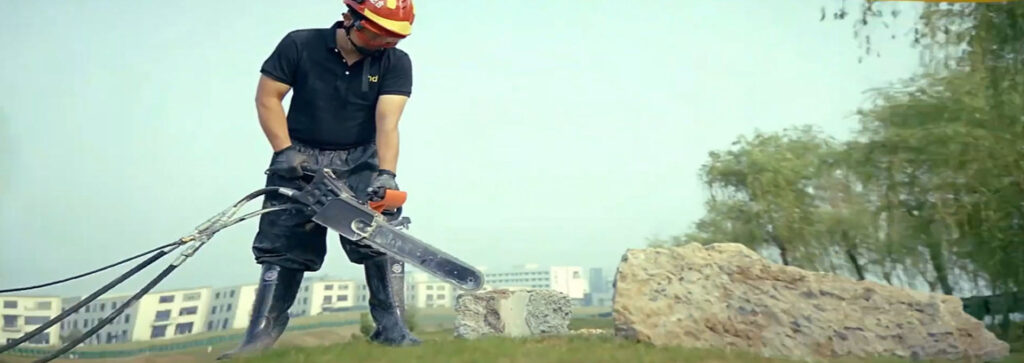
Applications for hydraulic diamond concrete chainsaw
1. Construction & Renovation
- Door & Window Openings: Plunge‑cutting precise rectangular openings in concrete/RC walls without over‑cutting corners.
- Pipe & Duct Penetrations: Cutting holes for plumbing, electrical conduits, HVAC ducts, and utility lines.
- Structural Modification: Trimming, notching, and resizing concrete beams, columns, slabs, and foundations.
- Masonry & Stone Work: Cutting natural stone, brick, block, sand‑lime brick, and asphalt.
- Concrete Pipe Cutting: Trimming and notching precast concrete pipes and culverts.
2. Demolition & Dismantling
- Selective Demolition: Removing sections of concrete structures while preserving adjacent parts.
- Bridge & Road Demolition: Cutting bridge decks, piers, abutments, and concrete road sections.
- Building Interior Demolition: Removing concrete walls, floors, and staircases in tight spaces.
3. Civil Engineering
- Trench & Excavation Work: Making separating cuts for pipe trenches and utility installations.
- Foundation & Pile Cutting: Trimming concrete piles and foundation elements.
- Dam & Reservoir Repair: Cutting concrete structures for maintenance and modification.
4. Emergency Rescue & Public Safety
- Urban Search & Rescue (USAR): Cutting concrete/RC to access trapped victims in collapsed buildings.
- Fire & Disaster Response: Rapidly breaching walls and floors for firefighting and evacuation.
- Utility Emergency Repair: Cutting concrete to access and repair water, gas, and sewer lines.
5. Mining & Quarrying
- Rock & Coal Cutting: Cutting hard rock (Mohs hardness ≤8) and coal seams in mines.
- Stone Quarrying: Trimming and sizing natural stone blocks.
- Underground Excavation: Cutting rock in tunnels and underground construction.
6. Industrial & Specialized Applications
- Marine & Offshore: Cutting concrete structures in ports, docks, and offshore platforms.
- Nuclear & Industrial Decommissioning: Cutting radioactive concrete components (hydraulic power avoids spark risks).
- Flammable/Explosive Environments: Safe operation in mines and petrochemical facilities due to no electric spark risk.