
Hydraulic driven submersible pump
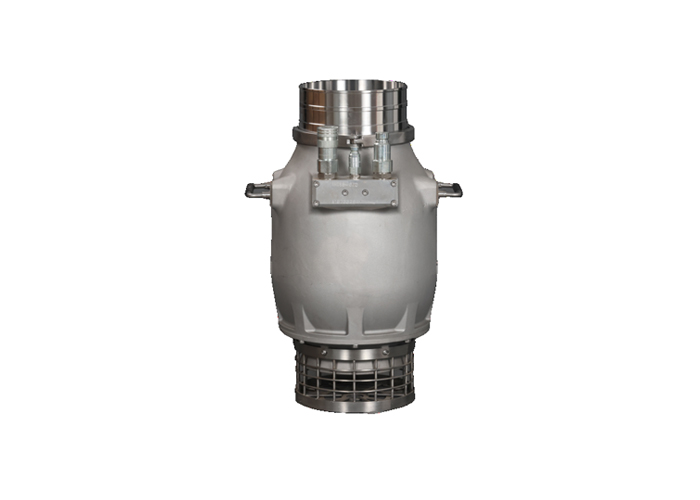
Hydraulic driven submersible pump
Product Details:
- Product Type: Hydraulic driven submersible pump
- Model: S10-800
What is Hydraulic driven submersible pump
NewaLux Hydraulic driven submersible pump utilize a unique axial flow design. Compared to traditional centrifugal pumps, axial flow pumps offer higher drainage efficiency and lower energy consumption, making them particularly suitable for applications requiring high flow rates. When used in series, they can achieve higher head and enable long-distance delivery. They are suitable for pumping sewage and wastewater with a certain solids content. They play an important role in flood control and rescue operations, agricultural irrigation, waterworks repairs, and sewage disposal.
◎Features
◆The hydraulic motor, developed in collaboration with domestic partners, boasts enhanced radial force resistance: Special bearings are installed in the hydraulic motor to enhance its radial force resistance, preventing shaft gnawing and ensuring the equipment’s stability and durability. The 800 and 1200 m³/h Hydraulic driven submersible pump utilize imported high-pressure axial piston motors.
◆The pump body is precision-cast from aluminum alloy, resulting in lightweight, corrosion resistant, and high-strength materials.
◆The impeller of Hydraulic driven submersible pump is cast from stainless steel, ensuring long-term operation and resistance to rust and wear. The stainless steel handle provides convenient operation, allowing operators to easily transport the pump in various environments and easily lift and lower it, improving work efficiency and safety.
| Type | S8-400 | S8-600 | S10-800 | S10-800 |
|---|---|---|---|---|
| Weight (kg) | 24 | 32 | 37 | 48 |
| Output (m³/h) | 400 | 600 | 800 | 1200 |
| Max. Head | 12 | 12 | 12 | 12 |
| Rated condition (m³/h @ m) | 300 @ 6 | 500 @ 6 | 600 @ 6 | 700 @ 8 |
| Output flow(lpm) | 34-38 | 64-72 | 68-76 | 110-120 |
| Operating pressure (bar) | 140-160 | 150-160 | 150-160 | 150-160 |
| Dimension(mm) | 325×310×510 | 350×355×520 | 367×395×575 | 500×460×870 |
| Outlet (mm) | Φ200 | Φ200 | Φ250 | Φ300 |
Features for a Hydraulic driven submersible pump
The Anatomy of a Push System
A hydraulic driven submersible pump doesn’t rely on atmospheric pressure to “suck” water up. Instead, it uses an internal hydraulic motor—often a compact gear or vane motor—to spin an impeller while fully underwater.
The “Push” Advantage: Because the pump is at the bottom of the liquid, it pushes the fluid toward the surface. This allows for significantly higher discharge heads (pumping height) and the ability to move fluids with a much higher specific gravity, such as mud or sand-laden slurry.
Why Hydraulics Outperform Electric and Gas
The decision to go hydraulic is often driven by three critical factors: Safety, Torque, and Durability.
Intrinsic Safety: There are no electrical cables in the water. This makes these pumps the “gold standard” for refinery work, manhole bypasses, or any environment where explosive gases (methane, gasoline vapors) might be present.
Variable Speed Control: By simply adjusting the oil flow from the Power Pack, you can control the GPM (gallons per minute) of the pump. There is no need for expensive Variable Frequency Drives (VFDs).
Dry-Run Capability: Most hydraulic pumps are cooled and lubricated by the very oil that drives them. If the pit runs dry, the pump can keep spinning without the “burnout” that typically destroys the seals on an electric or water-cooled pump.
Handling the "Heavy" Stuff: The Slurry Factor
Standard water pumps are easily ruined by sand or rocks. Hydraulic submersibles are often built as Agitator Pumps or Trash Pumps.
Agitators: Some models feature an external “fan” or agitator that stirs up settled solids at the bottom, turning them into a pumpable slurry.
Solids Handling: Many units can pass spherical solids up to 3 inches in diameter, making them indispensable for municipal sewage bypass or dredging operations.
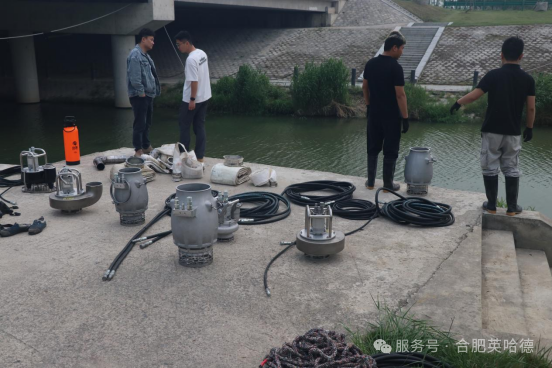
Core Applications: Where They Shine
| Environment | Specific Task |
| Construction | Dewatering deep foundation pits or bridge caissons filled with silt. |
| Municipal | High-volume sewage bypass during lift station repairs or flooding. |
| Marine | Salvaging sunken vessels or clearing sediment from around pier pilings. |
| Mining | Moving abrasive tailings or clearing flooded mine shafts. |
| Agriculture | Cleaning out manure pits or irrigation canals where debris is high. |
Technical Compatibility: The Power Source
The beauty of these pumps is their “plug-and-play” nature. They can be powered by:
Dedicated Power Packs: Portable diesel or electric units designed specifically for tool circuits.
Excavators/Skid Steers: Using the auxiliary hydraulic lines (the “hammer” circuit) of your heavy machinery.
Utility Trucks: Taking power from the PTO (Power Take-Off) of a maintenance vehicle.