
Table of Contents
ToggleAdvantages of Hydraulic Trash Pump
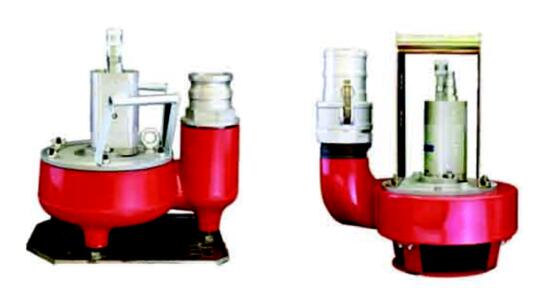
Customers often choose hydraulic trash pump (hydraulic-driven trash pump) for the following key reasons. hydraulic trash pump are particularly well-suited for industries like mining, metallurgy, dredging, and power generation, making them an ideal choice due to their unique advantages:
1. Adaptability to Harsh Operating Conditions
Highly Concentrated, Highly Abrasive Media: hydraulic trash pump are specifically designed to transport slurries containing solid particles (such as ore, gravel, and fly ash). Hydraulically driven versions are more resistant to frequent impact and wear.
Corrosion Resistance: Hydraulic systems typically utilize corrosion-resistant materials (such as high-chromium alloy impellers and rubber linings), making them suitable for chemically complex media.
2. Powerful and Controllable Power
High-Torque Starting: Hydraulic motors provide high starting torque, easily handling heavy loads (such as stalled rotors or high-viscosity slurries) during slurry pump startup.
3.Stepless Speed Regulator: By adjusting hydraulic flow and pressure, pump speed and output power can be precisely controlled to meet varying operating requirements (such as flow rate fluctuations or overload protection). 3. Installation Flexibility and Space Adaptability
No Power Constraints: Hydraulic drives do not rely on the power grid in remote mining areas, on mobile equipment (such as dredgers and construction machinery), or in explosion-proof environments, making them more suitable for diesel engines or mobile power sources.
Compact Design: The hydraulic motor’s small size makes it suitable for installations with limited space (such as underground operations and vehicle-mounted pumping systems).
More Advantages of Hydraulic Trash Pump
4. Reliability and Easy Maintenance
Overload Protection: The hydraulic system automatically relieves pressure via a relief valve, preventing motor burnout or mechanical damage.
Modular Maintenance: Hydraulic drive components (such as the motor and oil circuit) are easily accessible, eliminating the need to disassemble piping or the pump body for maintenance, reducing downtime.
Long Life: The hydraulic system is fully lubricated, reducing wear on mechanical transmission components (such as couplings and gearboxes).
5. Safety and Environmental Protection
Explosion-proof Performance: Hydraulic drives are spark-free, making them suitable for flammable and explosive environments (such as coal mines and oil fields).
Low Noise: Compared to electric motors, hydraulic systems operate much quieter, making them suitable for noise-sensitive areas.
6. Energy Saving and Economic Efficiency
Energy Recovery: Some hydraulic systems can recover braking or overflow energy (e.g., closed circuits), improving energy efficiency.
Low Maintenance Costs: Although the initial investment may be higher, the reliability and ease of maintenance of hydraulic systems reduce overall costs in the long term.
Working Environment & Safety
- Fully submersible design; can work deep in water, sludge, flood pits.
- No electric leakage risk, no fuel exhaust underwater; safer for confined & wet areas.
- Remote operation possible, easy for deep muddy water projects.
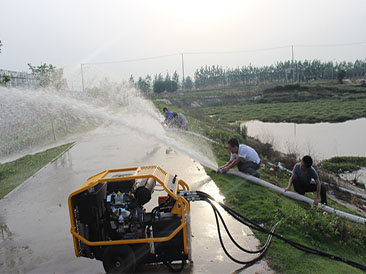
- Mostly self-priming portable pump, cannot submerge the whole unit.
- Engine exhaust & fuel oil have pollution & fire risks; poor ventilation limits use.
- Must place on dry ground, suction hose lift limits depth.
Mobility & Matching Flexibility
- Light pump body, rely on construction machinery movement; flexible on-site for excavator supporting jobs.
- Speed & flow adjustable by hydraulic pressure/flow.
- Need high-pressure oil pipes + quick coupling connection.
- Integral unit, wheeled portable, move freely alone without other machines.
- Simple start, direct operation anytime & anywhere.
- Fixed speed basically, hard to adjust flow precisely.
| Item | Hydraulic Trash Pump | Engine-Driven Trash Pump |
|---|---|---|
| Power supply | External hydraulic system | Gasoline / diesel engine |
| Installation | Submersible deep work | Dry ground placement |
| Safety | High, no exhaust / electric risk | Fire & exhaust pollution risk |
| Sludge performance | Excellent (with agitator) | General, easy air suction |
| Mobility | Dependent on host machinery | Independent & portable |
| Noise & emission | Low noise, zero underwater emission | Loud noise, exhaust pollution |
| Cost | High initial cost, low running cost | Low purchase, high fuel cost |