
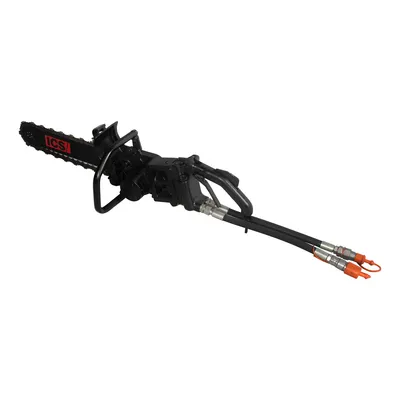
Why Hydraulic Power is the Utility Standard
Utility work often happens in “hostile” environments—muddy trenches, flooded culverts, or enclosed vaults. Hydraulic chainsaws thrive in these conditions because they derive their energy from compressed oil rather than internal combustion.
High Torque
The primary performance advantage is constant torque. While a gas saw might bog down or “pinch” when encountering heavy rebar, a hydraulic saw maintains consistent chain speed. This power allows it to plunge up to 25 inches deep from a single side, enabling the removal of entire sections of reinforced concrete pipe or thick road slabs in a single pass.
Enclosed Space & Indoor Safety
Because hydraulic chainsaws produce zero exhaust emissions, they are the only safe choice for indoor utility vaults or underground tunnels. Gas saws release carbon monoxide, which is a lethal hazard in confined spaces, whereas a hydraulic power pack can be stationed up to 100 feet away, outside the workspace.
Road Repair Applications: Precision Without Overcutting
Standard circular saws leave “overcuts” at the corners of a rectangular patch. In road repair, these overcuts create structural weak points where cracks eventually form.
Square Corner Cutting
A hydraulic chainsaw allows the operator to cut perfectly square corners. This is critical for:
-
Utility Patching: Creating clean, structural openings for access to gas or water lines.
-
Bridge Deck Repair: Removing specific damaged sections without compromising the surrounding reinforced structure.
-
Curbs and Gutters: Making precise vertical cuts in existing concrete without damaging the asphalt or sub-base.
Reinforced Concrete & Rebar
Modern infrastructure is heavily reinforced. Hydraulic chainsaws utilize diamond-embedded chains that “grind” through rebar rather than tearing it. This prevents the “kickback” common with abrasive blades, making the operation significantly safer for the technician.
Compliance and Safety in 2026
Safety regulations have evolved, and hydraulic chainsaw is inherently designed to meet the strictest modern standards.
2026 Silica Dust (OSHA) Compliance
As of 2026, OSHA’s Table 1 standards require integrated water delivery systems for virtually all concrete cutting. Hydraulic chainsaws are “wet-cut” by design. Water is pumped directly through the guide bar to:
-
Suppress 99% of respirable silica dust.
-
Lubricate the chain to prevent overheating and breakage.
-
Flush out slurry from deep plunge cuts.
Noise and Vibration Control
Hydraulic systems are significantly quieter than pneumatic or gas-powered alternatives. This allows for night-shift roadwork in residential areas with minimal noise complaints. Furthermore, the lack of a reciprocating engine reduces Hand-Arm Vibration (HAV), allowing operators to work longer shifts with less fatigue and a reduced risk of long-term injury.
Maintenance and Longevity
One of the most compelling reasons for utility crews to invest in hydraulic chainsaw is the Total Cost of Ownership (TCO).
-
Self-Lubricating: Because the tool is powered by hydraulic fluid, the internal components are constantly bathed in oil. It is common for a well-maintained hydraulic saw to last 10–15 years, whereas gas saws often require replacement after 2–3 years of heavy use.
-
Minimal Moving Parts: No spark plugs, carburetors, or air filters to clog with concrete dust. Maintenance is usually limited to checking the hydraulic couplers and the chain tension.
Recommended Professional Hydraulic Saws
For crews looking to upgrade their utility fleet, these models represent the current gold standard:
- NEWALUX DS11 Hydraulic chainsaw:Light weight and powerful function,with With laser welded segments impregnated with diamond and water channel for chain lubrication and cooling
-
ICS 890F4 Hydraulic Saw: The heavy-duty “workhorse” of the industry. It is designed for the deepest cuts (up to 25″) and features an ultra-durable chassis for the most demanding utility jobs.
-
ICS 814PRO Precision Saw: A lighter, more maneuverable option ideal for municipal repair crews who need to make quick, precise cuts in tight spaces or on smaller utility pipes.
-
Stanley DS11 Diamond Chain Saw: Renowned for its ergonomic handle design and high-torque motor, making it a favorite for bridge deck and highway repair projects.
Comparison of Demolition Saw Technologies
| Feature | Hydraulic Chainsaw | Gas Cut-Off Saw | Pneumatic Saw |
| Max Cut Depth | 25″ + | 5″ – 6″ | 6″ – 8″ |
| Indoor Safe? | Yes (No Exhaust) | No (CO Hazard) | No (Oil Mist) |
| Corner Precision | Perfect Square | Overcuts | Overcuts |
| Service Life | 10+ Years | 2-3 Years | 5-7 Years |