
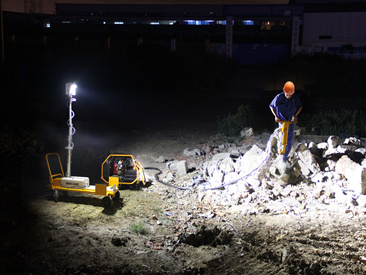
A handheld hydraulic breaker is a portable, hydraulically powered breaker widely used in demolition, mining, road construction, and other fields. The following is an analysis of its advantages and disadvantages:
I. Advantages
1)High Crushing Capacity
High Impact Energy: The hydraulic system provides powerful instantaneous impact force (up to 3-5 times that of electric or pneumatic tools), making it suitable for crushing hard materials such as concrete and rock.
Continuous Operation: No frequent tool head changes are required, maintaining stable output over time.
2)Energy Saving and Environmental Protection
High Energy Efficiency: The handheld hydraulic breaker has low energy consumption, saving 30%-50% more energy than pneumatic tools.
Low Noise and Vibration: Compared to internal combustion-powered breakers, it offers lower noise and vibration (approximately 70-85 decibels), reducing operator fatigue.
3)Flexibility and Adaptability
Power-Independent: It can be powered by an excavator, construction vehicle, or portable hydraulic power station, making it suitable for field operations without a power source.
Versatile Application: Interchangeable drill bits (pointed, flat, etc.) adapt to various tasks, including demolition, chiseling, and excavation. High Durability
Overload Resistance: The hydraulic system features built-in overflow protection to prevent equipment damage caused by sticking.
Long-Life Components: Core components (such as the cylinder and piston) are made of alloy steel quenched for excellent wear resistance.
II. Disadvantages
1)Large Equipment Investment: Requires a hydraulic power source (such as a hydraulic station or main unit), resulting in higher overall costs than electric or pneumatic tools.
Complex Maintenance: Hydraulic oil requires regular replacement, and aging seals can lead to leaks.
2)Weight and Operating Burden: Large size and weight: A typical handheld hydraulic breaker weighs approximately 15-30 kg, making prolonged operation prone to fatigue (requiring an auxiliary stand or multiple people).
Hydraulic Line Restrictions: Connecting the hydraulic line may limit the range of motion and pose a risk of snagging.
3)Environmental Sensitivity: Temperature Effects: Hydraulic oil viscosity increases at low temperatures, potentially causing starting difficulties; heat dissipation is required in high-temperature environments.
High Cleanliness Requirements: Hydraulic systems are sensitive to oil cleanliness, and dust or moisture contamination can shorten service life. Professional Requirements
4)Training Required: Hydraulic pressure adjustment and oil line connections require specialized personnel. Misuse may cause equipment failure.